
 American Dream
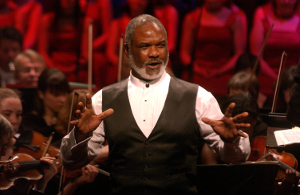
An evening of words and music reflecting both the optimism of the American Dream and the bitterness expressed by the excluded and oppressed. Willard White sings songs by Copland, Gershwin, Rodgers and Hammerstein, plus spirituals and with poems by Walt Whitman and Langston Hughes interpolated.
Instrumental items include:| Britten, arr. Farrington | Cabaret Suite |
| Dizzy Gillespie | Lights and Shadows |
| Art Tatum | Tiger Rag |
| Scott Joplin | Maple Leaf Rag |
| Piazzolla, arr. Farrington | Oblivion, Devil Suite |
 Jazz dans la nuit
| Satie | Cabaret Songs | Ravel | Violin Sonata | Roussel | Jazz dans la nuit (song) | Milhaud | La Cr'ation du Monde | Iain Farrington | A Little Cabaret |
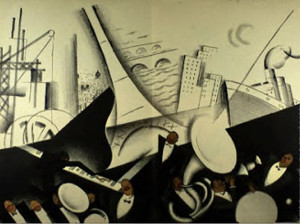
A mixed-media programme for baritone and ensemble capturing the heady spirit of the Paris Jazz Age. Jazz dans la nuit incorporates cabaret songs by Satie, Poulenc and Roussel, Ravel's jazz-inspired Violin Sonata and an arrangement by Iain Farrington of Milhaud's short ballet score La Création du Monde. A new 12-minute work specially commissioned from Iain Farrington, entitled A Little Cabaret, depicts a group of entertainers in a series of short sketches. The music is predominantly jazzy and tuneful, in a wide range of moods.
 Lights and Shadows
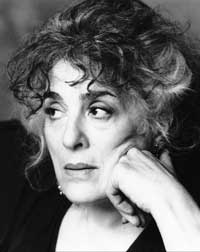
Eleanor Bron with Counterpoise
The incomparable Eleanor Bron brings her wide-ranging talents to an extraordinarily rich and diverse show which draws on cabaret, poetry and jazz, as well as various classical genres. The programme spotlights the fusion of words and music in contrasting genres and settings, from Britten's nightclub blues The Spider and the Fly to Copland's evocative urban landscape Quiet City. Poetry by Keats, Auden, Eliot and Langston Hughes is woven into the texture of the programme and cross-references between the genres (jazz/classical, poetry/music) explored. There is also a rare opportunity to sample the notoriety of George Antheil, the Bad Boy of Music.
| Weill | The Threepenny Opera Suite |
| Weill | Mack the Knife |
| Spoliansky, arr. Farrington | Zwei Krawatten Potpourri |
| Hollaender, arr. Farrington | Rag 1920 |
| Dizzy Gillespie/Paparelli | Lights and Shadows |
| Schulhoff | Hot Sonata |
| Britten, arr. Farrington | Cabaret Suite |
| Turnage | Two Elegies Framing a Shout |
| Poems by Auden, Brecht and Langston Hughes. | |
 Metamorphoses
| Britten | Metamorphoses After Ovid |
| Britten, arr. Farrington | Cabaret Suite |
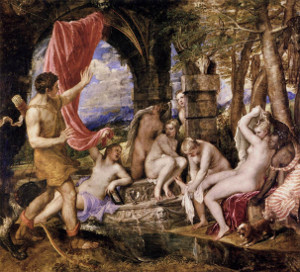
| David Matthews | Actaeon |
| Walton | Façade |
David Matthews' Actaeon in a vibrant translation of the Ovid poem by Ted Hughes combining Romantic nature imagery with a gripping narrative; Britten's jazzy Cabaret Music and Walton's ever-popular setting of Edith Sitwell's delectably eccentric Façade poems, both in new arrangements by Iain Farrington. Plus Britten's evocative Metamorphoses After Ovid played on the soprano saxophone.
 Soft City
| Benjamin Britten | Six Metamorphoses after Ovid |
| Jean Hasse | The Fall of the House of Usher |
| Russell Hepplewhite | Urban Abstract |
| Charlotte Bray | Soft City |
This programme explores themes of construction and disintegration, of harmony and alienation, with particular regard to spatial concerns, through music and film. While Charlotte Bray's Soft City blurs the boundaries between urban and organic tissues, and proposes a vision of the city as a fragile anthropomorphic landscape, Russell Hepplewhite's Urban Abstract celebrates the individual 'personality' and beauty of bold architectural edifices. Jean Hasse's score for the classic Watson and Webber silent short The Fall of the House of Usher reflects the film's morbid obsession with death and dissolution; Britten's Metamorphoses after Ovid similarly play with ideas of transformative change.
 Ghosts Before Breakfast
| Strauss | The Castle by the Sea |
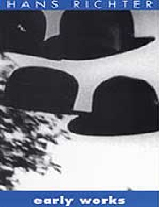
| Hans Richter | Ghosts Before Breakfast (silent film with live music by Jean Hasse) |
| Kagel | Old/New |
| Kagel | MM51 |
| Rushton | The Concoction of a Charlatan |
| Poe | Shadow |
| Goebbels | In the Basement |
| Rushton | On the Edge |
An adventurous and ambitious exploration of the interaction between words, music and visuals. The programme explores supernatural motifs and also the concept of melodrama not only as a stage genre, but also in terms of its influence on opera and early silent film, examining the broader idea of the relationship between sound and image, spoken text and music.
On the Edge is a boldly innovative, cross-genre project bringing together elements of music, theatre and video. The story, set in the Swiss Jungfrau region, takes as its starting point the memoirs of Sir Arnold Lunn, the inventor of the slalom, and his recollection of his wife's near-fatal accident while climbing the Jungfrau. The scenario also weaves in the terrifying booming sounds that herald an avalanche, a light-hearted philosophical discussion of the purpose of sport and a Swiss folktale. The 35-minute piece alternates music and narration to create a work which, in the composer's own words, will be 'colourful, strange, multilayered and slightly absurd'.
 Loved To Death
| Ross Lorraine | Not More Lovely |
| Jean Hasse | The Fall of the House of Usher (music to accompany silent film short) |
| Mauricio Kagel | MM51/Nosferatu |
| Ryo Noda | Mai |
| John Casken | Deadly Pleasures |
John Casken's vividly theatrical setting of a racy Cleopatra story by D.M. Thomas, based on a Pushkin tale, is given alongside Ross Lorraine's Not More Lovely, inspired by Poe's haunting story The Oval Portrait, and Jean Hasse's The Fall of the House of Usher, a new score to accompany the classic Watson and Webber silent film, together with Kagel's vampiric MM51/Nosferatu and Ryo Noda's virtuosic Mai for solo saxophone.
 Tales of the Macabre
| Richter/Hasse | Ghosts before Breakfast |
| Jean Hasse | The Fall of the House of Usher |
| Mauricio Kagel | MM51/Nosferatu |
| John Casken | Deadly Pleasures |
| Edward Rushton | On the Edge |
In the 2000 years since her death, the image of Cleopatra has been recreated over and over again, each time in a form that fits the prejudices and fantasies of the age that produced it. John Casken's Deadly Pleasures sets an intriguing story about Cleopatra by Pushkin, completed by the novelist and translator D.M. Thomas. Cleopatra offers a night of love to any man, but on one condition...
Edward Rushton's 'colourful, strange, multilayered and slightly absurd' On the Edge is a boldly innovative, cross-genre project, set in the Swiss Jungfrau region. The scenario weaves in the terrifying booming sounds that herald an avalanche, a light-hearted philosophical discussion of the purpose of sport and a Swiss folktale.
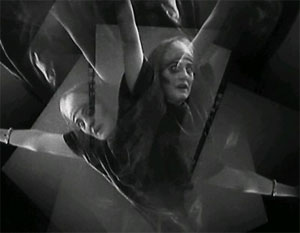
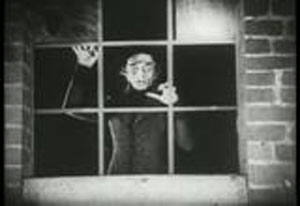
Accompanying a rare showing of the cult 1927 Dada film Ghosts Before Breakfast is a new score specially commissioned from Jean Hasse, who has also composed original music for the classic German Expressionist film version of Poe's story by Watson and Webber. The programme also includes Mauricio Kagel's film collage MM 51, which quotes Murnau's classic silent Nosferatu: a short, sharply humorous piece of musical theatre - funny, slightly sinister and utterly mesmerising.
 The Power of Love
| Liszt | Lenore |
| Liszt | Petrarch Sonnet |
| Wagner | Traume |
| Grieg | Bergliot |
| Szymanowski | Chant de Roxane |
| John Casken | Deadly Pleasures |
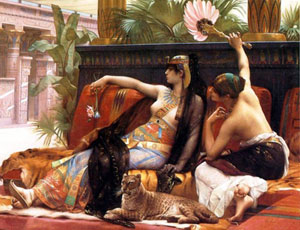
In the 2000 years since her death, the image of Cleopatra has been recreated over and over again, each time in a form that fits the prejudices and fantasies of the age that produced it. John Casken's Deadly Pleasures sets an intriguing story about Cleopatra by Pushkin, completed by the novelist and translator D.M. Thomas. Cleopatra offers a night of love to any man, but on one condition...
Grieg's spine-chilling melodrama Bergliot, based on a story of treachery and vengeance from the Nordic sagas, has been specially arranged by Edward Rushton. A ghostly story of faithful but doomed love is set memorably by Liszt in his melodrama Lenore.